BRICS has overtaken the G7 on several major measures, but the battle for global influence is far from settled. Here is what the numbers actually show.
For decades, the Group of Seven—the United States, Canada, the United Kingdom, France, Germany, Italy and Japan—has represented the core of the Western economic and political order.
But that balance is changing.
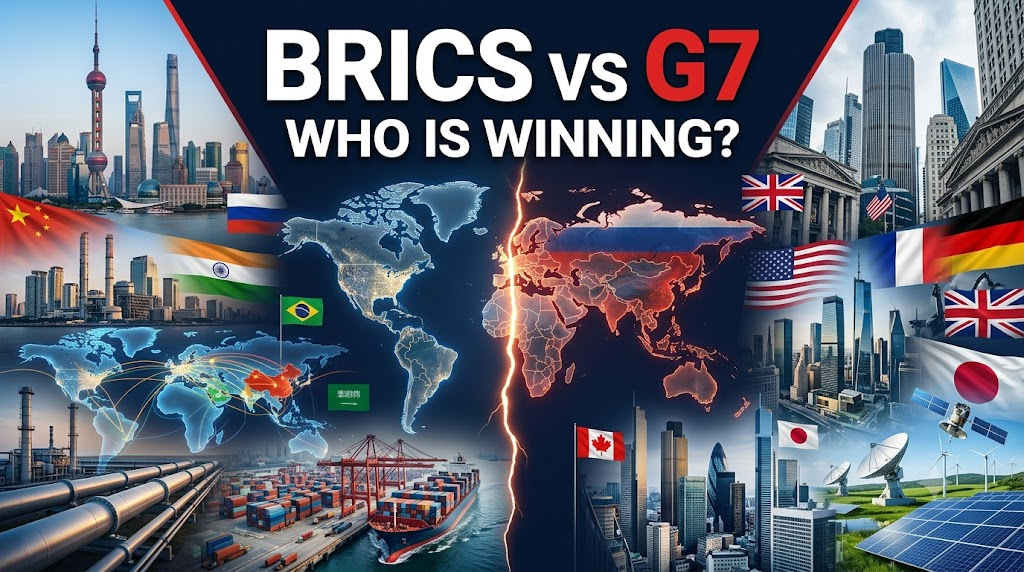
The expanded BRICS grouping now brings together 11 full members: Brazil, Russia, India, China, South Africa, Egypt, Ethiopia, Iran, Saudi Arabia, the United Arab Emirates and Indonesia. Egypt, Ethiopia, Iran, Saudi Arabia and the UAE joined in 2024, while Indonesia became a full member in 2025.
Together, these countries represent almost half of the world’s population and around 40% of global economic output when measured using purchasing power parity (PPP). The International Monetary Fund’s latest data show just how significant that shift has become.
So, has BRICS actually defeated the G7?
Not across every measure.
But on several of the indicators that determine long-term economic weight, the balance has clearly moved toward BRICS.
BRICS vs G7: The numbers at a glance
| Indicator | BRICS | G7 | Advantage |
|---|---|---|---|
| Full members | 11 | 7 | BRICS |
| Global population | Nearly 50% | About 10% | BRICS |
| GDP at PPP | About 40% of world economy | About 29% | BRICS |
| Global merchandise exports | About 23–24% | 26.7% | G7 |
| Inward FDI share | About 15% | 31% | G7 |
| Military spending | Lower overall | Much higher | G7 |
| Nominal GDP | Lower | Higher | G7 |
| Energy and commodity weight | Extremely high | Lower | BRICS |
The comparison immediately shows why the debate is more complicated than a simple winner-and-loser headline.
1. BRICS has a larger share of the global economy at PPP
This is probably the most important statistic behind the current BRICS-versus-G7 debate.
According to the latest IMF-based comparisons, BRICS accounts for roughly 40% of global GDP when measured at purchasing power parity, while the G7 accounts for roughly 29%.
PPP adjusts for differences in the cost of goods and services between countries. It is therefore particularly useful when comparing the size of domestic economies and the purchasing power of their populations.
China and India are the biggest reasons for BRICS’ advantage.
China alone represents nearly 20% of global GDP on a PPP basis, while India’s share is above 8%, according to the IMF’s latest data. Brazil and Russia add further weight.
This is a major change from the economic landscape of previous decades.
However, there is an important caveat.
If GDP is measured using market exchange rates, the G7 remains substantially larger. That distinction matters because nominal GDP is more relevant when assessing international financial power, the ability to invest abroad and the value of economies in dollar terms.
So BRICS has won the PPP comparison—but not the nominal-GDP comparison.
2. Population is where BRICS has an overwhelming advantage
This is not a close contest.
The 11 BRICS members collectively account for nearly half of humanity, while the G7 represents only around one-tenth of the world’s population.
China and India alone account for more than 2.8 billion people.
Add Indonesia, Brazil, Russia, Egypt, Ethiopia, Iran, South Africa, Saudi Arabia and the UAE, and BRICS becomes one of the largest concentrations of consumers, workers and emerging markets on the planet.
That gives the group enormous potential.
A larger population can mean:
- Bigger consumer markets
- Larger labour forces
- Greater manufacturing capacity
- More potential technology users
- Greater demand for energy and infrastructure
- Larger domestic markets for companies
But population alone does not equal wealth.
Average living standards remain substantially higher across the G7. This is one of the areas where the G7 maintains a major advantage.
3. The trade picture is more complicated
It is tempting to say BRICS has already overtaken the G7 in global trade.
The reality is more nuanced.
The Organisation for the G7? No—the Office of the Global Market? No. The important comparison here comes from the Official Monetary and Financial Institutions Forum (OMFIF).
OMFIF estimates that BRICS countries account for around 23% of global exports, compared with 26.7% for the G7.
The G7 also has a major advantage in inward foreign direct investment, accounting for around 31%, compared with approximately 15% for BRICS.
So, on these measures, the G7 remains ahead.
But BRICS is rapidly becoming more important to global trade.
Recent trade data show that BRICS countries accounted for roughly 24% of global merchandise exports and 19% of global merchandise imports in 2025.
And trade between BRICS members has grown dramatically.
According to the Financial Times, intra-BRICS exports reached approximately $1.2 trillion in 2025, more than 13 times the level recorded in 2003.
That is one of the clearest signs that BRICS is developing a more interconnected economic ecosystem.
4. China is the heavyweight inside BRICS
There is another fact that cannot be ignored.
BRICS is not an economically equal partnership.
China is by far the largest economic and trading power inside the group.
Recent 2026 trade data show China accounted for approximately 66% of BRICS exports and 59% of its imports in the first half of the year.
China’s dominance gives BRICS enormous manufacturing and trade capacity.
But it also creates a vulnerability.
The greater China’s share becomes, the more the overall BRICS economic story depends on a single country.
That makes BRICS powerful—but not necessarily as cohesive as the G7.
5. Energy is one of BRICS’ biggest strategic advantages
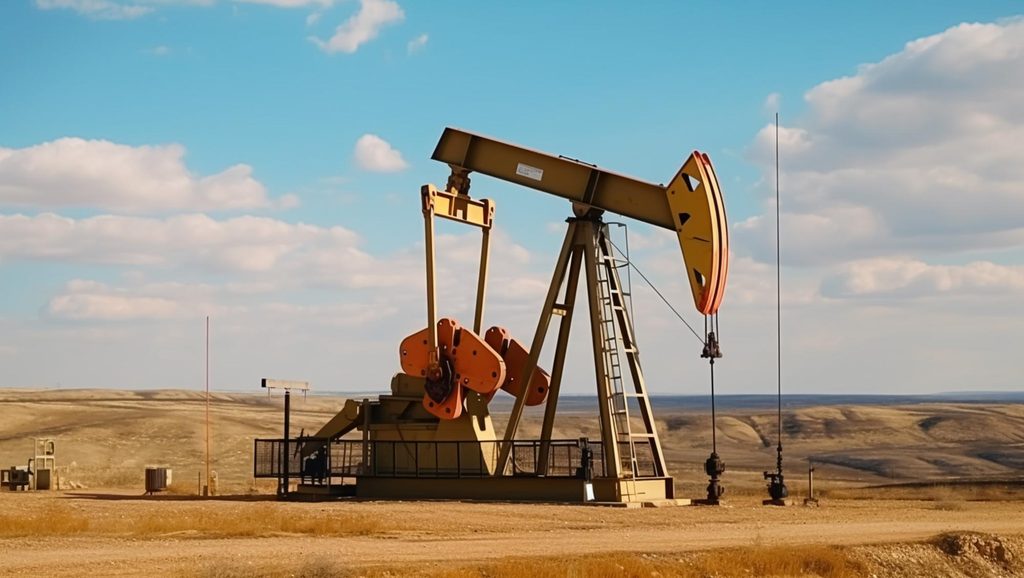
BRICS has assembled an extraordinary collection of major energy producers.
Russia remains one of the world’s largest oil and gas producers.
Saudi Arabia and the UAE are major oil exporters.
Iran is a major hydrocarbon producer.
Brazil is a major oil producer.
Meanwhile, China and India are two of the world’s biggest energy consumers.
This combination gives BRICS substantial influence across global energy markets.
It also matters beyond oil.
BRICS countries collectively possess major shares of global production of commodities, minerals and agricultural products.
That gives the group leverage over critical supply chains—from energy and food to industrial raw materials.
6. Military power tells a different story
This is where the claim that BRICS has “beaten the G7 in every parameter” falls apart.
The G7 contains the United States, by far the world’s largest military spender.
According to SIPRI, global military expenditure reached $2.887 trillion in 2025. The United States, China and Russia together accounted for $1.48 trillion, or 51% of global military spending.
The United States alone remains a military spending giant.
And the G7 includes several other major military powers, including the UK, France, Germany, Italy, Japan and Canada.
BRICS does have enormous military capabilities because of China, Russia and India.
But collectively, the G7’s military and defence ecosystem remains extremely powerful.
So this is clearly not a BRICS victory.
7. The dollar remains the G7’s biggest structural advantage
Economic size isn’t the same as financial influence.
The US dollar remains the world’s dominant reserve and international currency.
That gives the United States—and indirectly the wider Western financial system—an enormous advantage.
Global banking, capital markets, international payments and commodity transactions remain deeply connected to dollar-based finance.
BRICS has repeatedly discussed increasing the use of national currencies and developing alternative payment mechanisms.
But creating an alternative to the dollar is considerably harder than increasing trade in local currencies.
This means BRICS has made progress toward financial diversification, but it has not replaced the dollar-based global financial system.
8. Technology is another area where the gap remains complicated
The BRICS group contains some extraordinary technological capabilities.
China is a global leader in:
- Artificial intelligence
- Electric vehicles
- Batteries
- Telecommunications
- Manufacturing
- Renewable energy
- E-commerce
- Industrial robotics
India has become a major force in:
- Software
- Digital payments
- Information technology
- Space technology
- Pharmaceuticals
- Digital public infrastructure
Russia retains major capabilities in aerospace, nuclear technology and military technology.
But the G7 still has enormous advantages in advanced semiconductor technology, global technology companies, research institutions, venture capital and high-end financial technology.
Therefore, technology is another mixed category, rather than a clear BRICS victory.
9. BRICS has a huge natural-resource advantage
This is one area where the expanded group becomes particularly powerful.
The members include major producers and exporters of:
Oil: Saudi Arabia, Russia, UAE, Iran, Brazil
Natural gas: Russia, Iran
Agricultural commodities: Brazil, Russia, India
Industrial minerals: China, Brazil, South Africa, Russia and others
Rare and strategic materials: China and several other BRICS members
This matters because the global economy is increasingly dependent on secure supplies of energy and critical minerals.
As the world moves toward electric vehicles, batteries, renewable energy and advanced manufacturing, control over mineral supply chains is becoming a strategic issue.
10. Foreign reserves also favour BRICS
Another major advantage for BRICS is the enormous foreign-exchange reserve holdings of several of its members.
China has the world’s largest foreign-exchange reserve stock, while India, Russia, Brazil and other BRICS economies also hold substantial reserves.
That provides financial resilience and gives several members a buffer against external shocks.
But again, reserve size should not be confused with collective financial power.
The reserves belong to individual countries, not to a single BRICS treasury.
So, has BRICS actually defeated the G7?
No—not in every category.
But the data show something arguably more important.
The old assumption that the G7 automatically represents the overwhelming majority of global economic power is no longer accurate.
BRICS has clear advantages in:
Population
GDP measured at PPP
Energy and commodities
Emerging-market consumer demand
Several areas of manufacturing
Long-term growth potential
The G7 remains stronger in:
Nominal GDP
Military spending
Global financial markets
Inward foreign investment
High-end technology ecosystems
Dollar-based financial influence
Per-capita income
And in some areas—especially trade—the two blocs are much closer than viral social-media comparisons suggest.
The bigger story is not BRICS vs G7
The most important change may be happening beyond the headline rivalry.
The global economy is becoming increasingly multipolar.
For decades, the United States and its traditional allies dominated the world’s economic and financial architecture.
Today, China and India are much larger forces than they were at the beginning of the 21st century. Indonesia is emerging as a major economic power. Brazil remains a crucial agricultural and resource producer. Gulf economies have enormous energy and financial influence.
At the same time, BRICS is trying to build stronger trade, investment, payment and development institutions.
The group’s members have also pushed for greater representation of developing countries in institutions such as the IMF and United Nations.
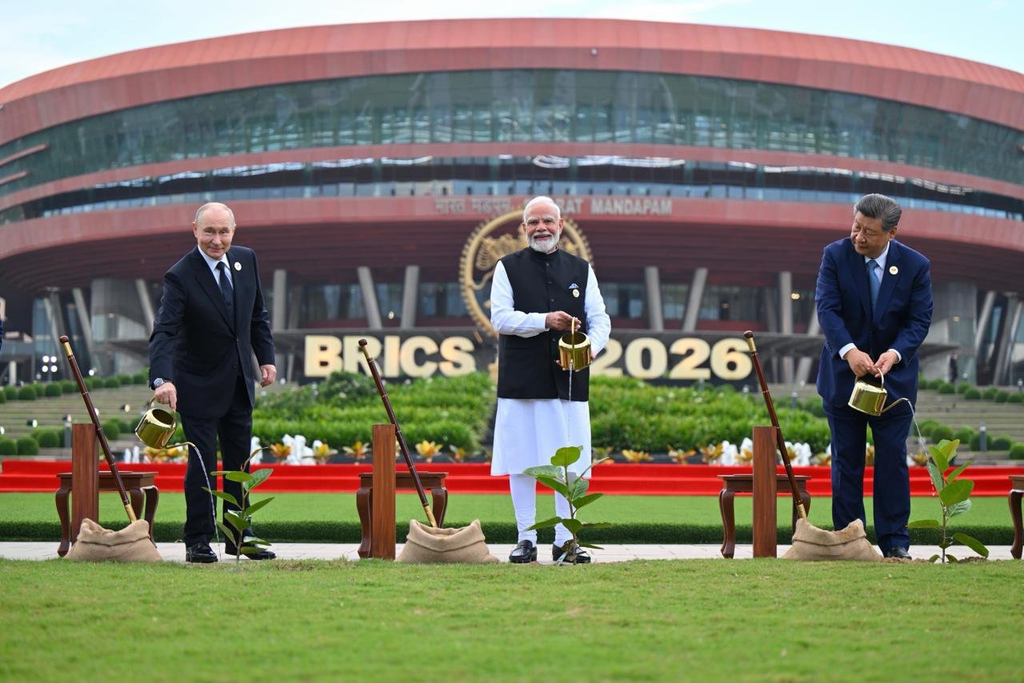
The 2026 BRICS summit in New Delhi has reinforced that ambition, with members discussing trade, AI, digital infrastructure, energy, climate and reforms to global governance.
But BRICS has a fundamental challenge.
It is much more diverse than the G7.
China and India have their own strategic rivalry.
Iran and the UAE have very different geopolitical relationships.
Russia’s relationship with the West is dramatically different from that of countries such as India or the UAE.
Saudi Arabia maintains deep economic links with Western economies while also strengthening ties with China and other BRICS members.
This diversity can make BRICS harder to coordinate.
The G7, despite its own disagreements, has much deeper institutional, financial and security links.
The verdict
If the question is:
“Has BRICS overtaken the G7 in every parameter?”
The answer is no.
But if the question is:
“Has BRICS become a larger force in the global economy than the West can afford to ignore?”
The answer is clearly yes.
BRICS now represents roughly 40% of global GDP on a PPP basis and nearly half of the world’s population, while its members control major portions of global energy and commodity supply.
Yet the G7 retains enormous advantages in nominal economic output, military spending, financial markets, investment and high-income economies.
The real story, therefore, is not that BRICS has defeated the G7.
It is that the world is moving from a predominantly Western-led economic order toward a more competitive and multipolar system.
And the numbers suggest that this shift is no longer a distant possibility.
It is already underway.
3 thoughts on “BRICS vs G7: The Global Power Shift Is Becoming Impossible to Ignore”