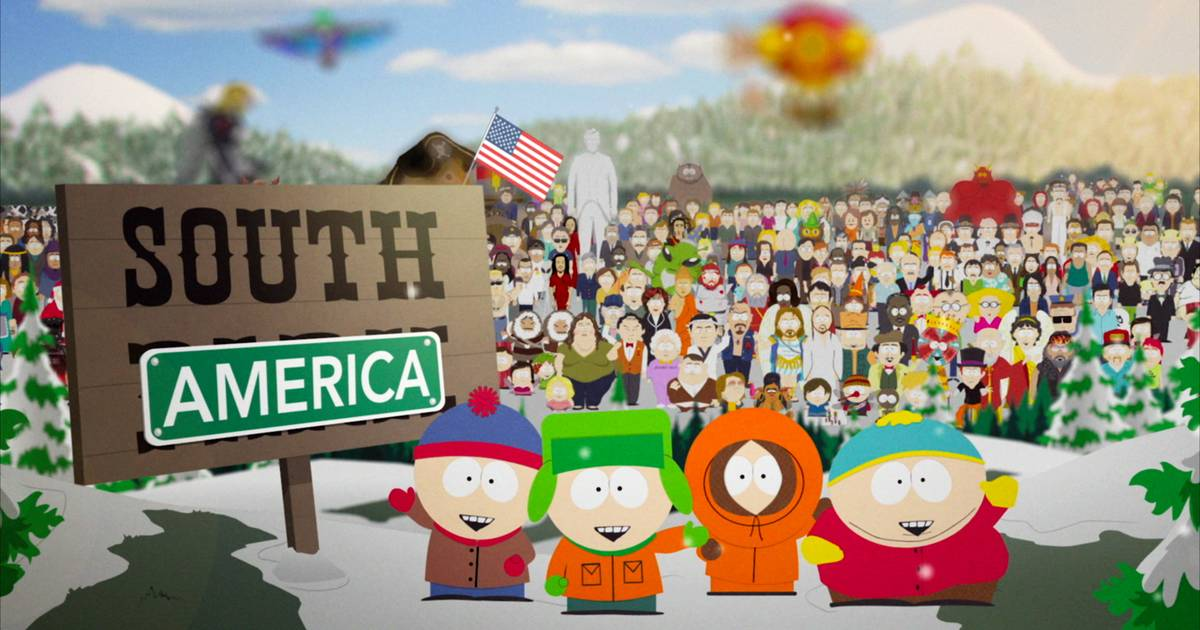
After nearly three decades of sending its four foul-mouthed schoolchildren into America’s most divisive cultural debates, South Park has returned with one of its boldest jokes yet: the town—and apparently the series itself—is now called South America.
The satirical rebranding became official in the Season 29 premiere, titled “South American Biker Gangs.” Rather than treating the change as a temporary promotional stunt, creators Trey Parker and Matt Stone incorporated it into the show’s opening sequence, dialogue and wider political commentary.
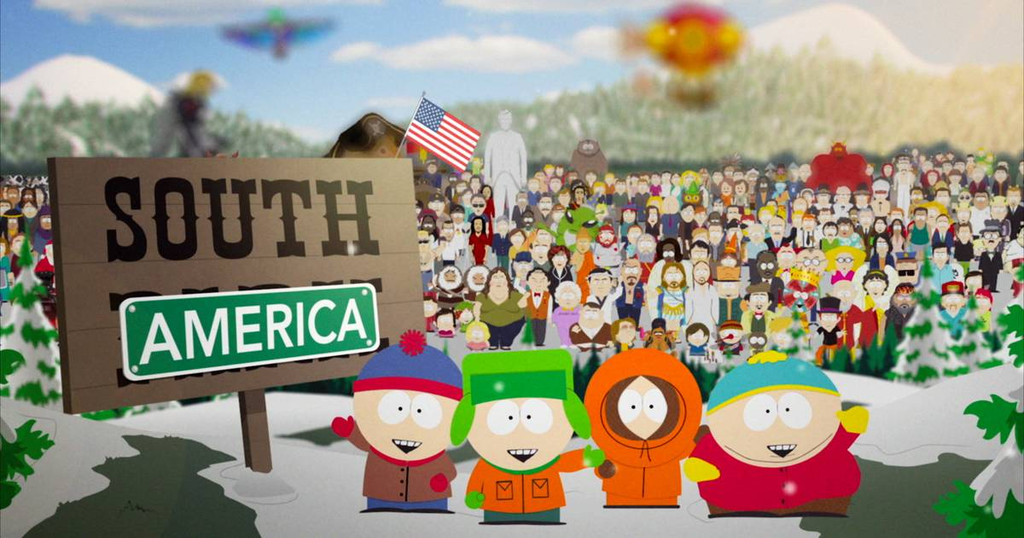
The familiar theme song was rewritten to welcome viewers to “South America,” while the characters casually used the new name as though nothing unusual had happened. That unquestioning acceptance is central to the joke. The premiere presents an absurd change as an established fact, leaving the audience to recognize the political target for itself.
Although the new title sounds dramatic, South Park has not permanently abandoned its identity or moved its characters to the continent of South America. The change is a satirical device aimed at President Donald Trump’s efforts to attach “America” to prominent geographic names—and at the institutions that quickly accommodate such decisions.
Why Did South Park Change Its Name?
Parker and Stone announced the rebranding shortly before the Season 29 premiere, saying they had been inspired by the “bravery and patriotism” of Apple and Google. Their statement was deliberately sarcastic, referring to the technology companies’ handling of government-led geographic name changes.
The creators also thanked their parent company, Paramount, while describing it as a “Skydance Capitulation”—a pointed play on Paramount’s corporate relationship with Skydance and the idea of powerful media organizations yielding to political pressure.
The gag follows real moves to rename locations such as the Gulf of Mexico as the Gulf of America, along with reports and satire surrounding the proposed use of “Lake America” for Lake Ontario. Digital map providers became part of the controversy because their platforms determine which names millions of users see every day.
By transforming South Park into South America, Parker and Stone extended the argument to its most ridiculous conclusion. If governments and corporations can alter familiar names with little resistance, the show suggests, why should a fictional Colorado town be protected from the same treatment?
The official South Park announcement said the series was changing its name after 29 years. Yet the exaggerated language and political context made it clear that the announcement was part of the joke rather than a conventional television rebrand.
The New Name Takes Over the Season 29 Premiere
The premiere does more than place a new logo on the screen. “South America” is woven throughout the episode, beginning with the altered opening song.
Residents refer to their community by its new name without stopping to explain when or how it changed. That silence makes the satire more effective: everyone has apparently accepted the new reality, even if it makes little sense.
The episode also contains jokes involving Google Maps and Apple Maps, reinforcing the suggestion that large technology companies help political decisions become normalized. The central criticism is not only about one politician changing a name. It is also about how quickly corporations, public institutions and ordinary citizens may begin treating an imposed label as unquestionable.
The new identity appears likely to continue beyond a single scene. Season 29 consists of six scheduled episodes, and the premiere treats “South America” as the town’s established name rather than a misunderstanding that will be corrected before the credits roll.
Whether Parker and Stone will eventually restore the original title remains unknown. For the moment, the show’s official website and promotional material are embracing the gag, while streaming services still make the program recognizable to viewers as South Park.
What Happens in “South American Biker Gangs”?
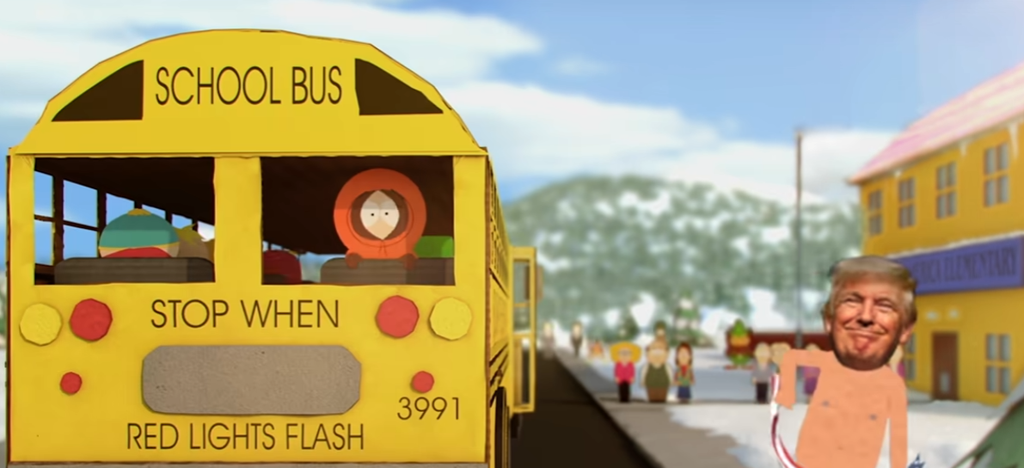
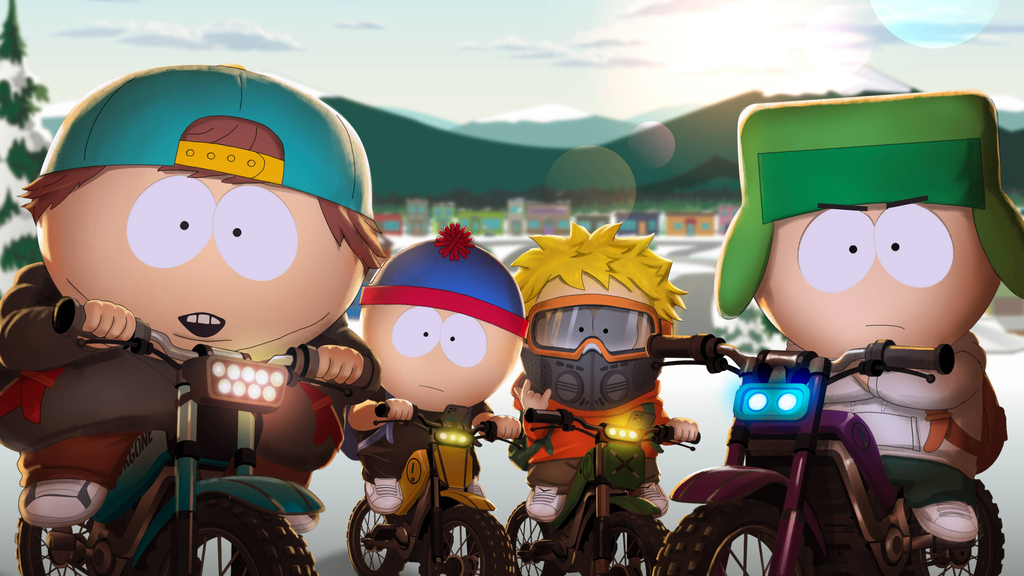
Despite the attention surrounding the name change, the main story focuses on an escalating conflict over e-bikes.
Cartman obtains a powerful electric bicycle and immediately uses it to provoke Stan, Kyle and Kenny. Unable to afford the same premium model, the other children turn to cheaper alternatives, contributing to a rapid increase in young riders speeding through town.
The craze infuriates Randy Marsh and a group of traditional cyclists. Convinced that the children’s e-bikes represent a threat to their community, the adults form a movement to oppose them. In typical South Park fashion, the supposed defenders of order soon begin behaving more aggressively and irrationally than the people they condemn.
What starts as a generational dispute becomes a parody of moral panic. A few incidents are used to portray every young e-bike rider as dangerous, while the adults pursue increasingly extreme solutions.
Kenny’s e-bike eventually explodes, producing another version of the character’s long-running fatal misfortune. His death becomes an opportunity for the adults to unite the town behind an e-bike ban, even though the actual cause of the explosion remains uncertain.
The storyline allows Parker and Stone to connect a relatively ordinary cultural annoyance with a broader political pattern: identify a threat, simplify the debate, exploit a tragedy and introduce a symbolic rule that may do little to solve the underlying problem.
Is Donald Trump in the Episode?
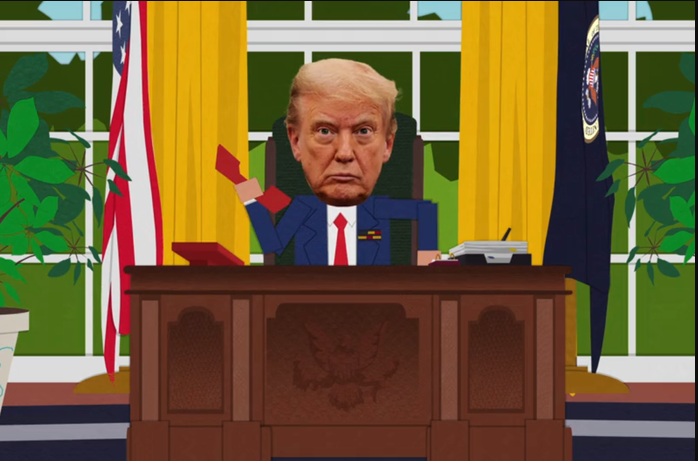
Trump appears briefly in the updated opening sequence, but he is not the central character in the premiere’s e-bike storyline.
That represents a slight change from recent South Park episodes that placed the president at the center of increasingly provocative plots. Season 29’s opening chapter attacks his political style indirectly, using the renamed town and the behavior of institutions around it rather than building the entire narrative around him.
The approach may also help the series avoid becoming trapped by its own political target. South Park has always responded to current events, but its most effective episodes frequently examine how entire communities react to power, outrage and fear—not merely the behavior of one public figure.
Here, Trump provides the inspiration for the “South America” gag, while the residents demonstrate how an absurd new reality can become normal when no one seriously resists it.
A Joke About Corporate Compliance
The references to Apple, Google and Paramount give the episode a second target beyond the Trump administration.
Modern technology companies do not simply display information; they shape the version of reality users encounter. When a map, search engine or voice assistant adopts a new geographic term, that label can quickly appear official regardless of the controversy behind it.
South Park turns that influence into comedy. Its fictional town has been renamed, the theme song has changed and the population has moved on. The speed of that transition reflects the creators’ view of how institutional compliance can transform a political demand into an everyday fact.
The jab at Paramount is particularly notable because it directs the criticism toward the company distributing the series itself. Parker and Stone have built their reputation on mocking powerful organizations, including the corporations that finance and broadcast their work. Calling Paramount a “Skydance Capitulation” signals that their satire is not limited to one political party or public official.
South Park Remains a Major Cultural Provocateur
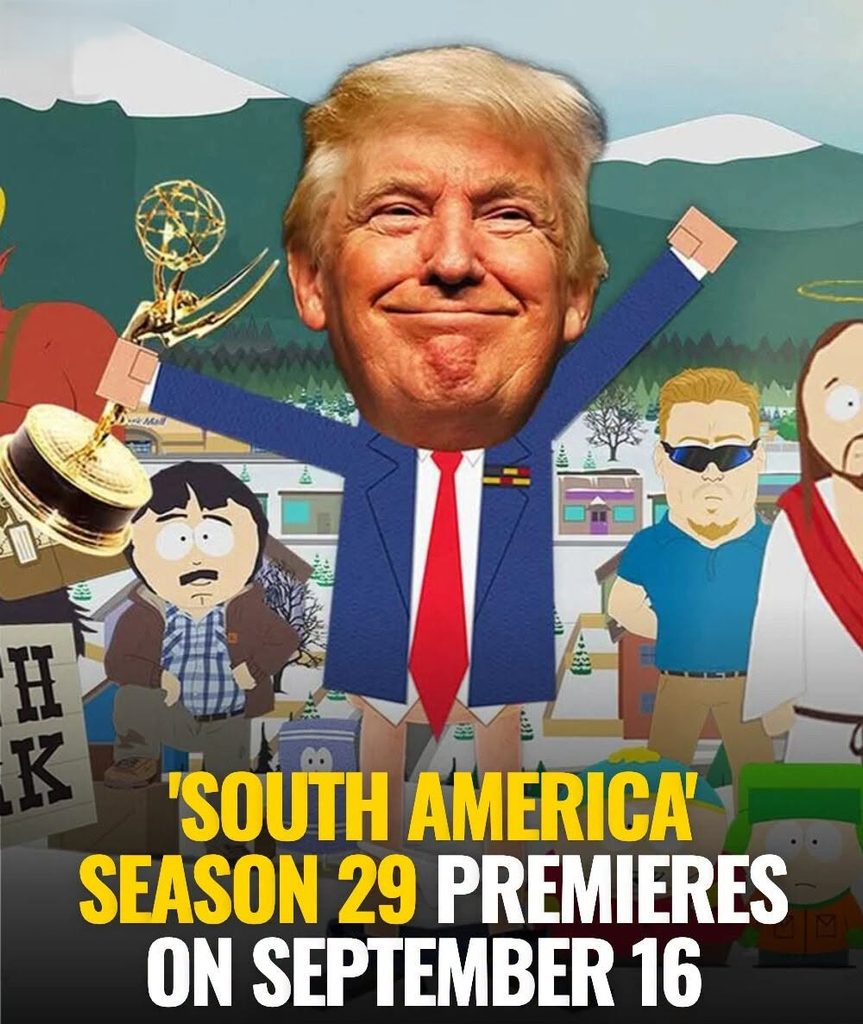
First broadcast on Comedy Central in August 1997, South Park will celebrate its 30th anniversary in 2027. The series has survived enormous changes in television, politics and popular culture by producing episodes quickly enough to respond to stories that are still unfolding.
Its longevity has also brought continued industry recognition. According to the show’s official announcement, South Park has won the Primetime Emmy Award for Outstanding Animated Program six times and received more than 20 Emmy nominations.
Season 29 arrived after another Emmy victory, giving Parker and Stone an ideal moment to launch a fresh controversy. Instead of marking the achievement with a safe celebration of the show’s history, they used the premiere to alter one of television’s most recognizable titles.
New Season 29 episodes are scheduled to air every other Wednesday on Comedy Central, with streaming availability through Paramount+ in supported markets. The limited six-episode schedule gives the creators room to keep the “South America” concept running throughout the season—or reverse it whenever the joke has reached its conclusion.
For now, the name change works because it is simultaneously ridiculous and recognizable. Viewers know the town is still South Park, just as they understand that changing words on a map does not change the physical place. But repetition, official approval and corporate adoption can still make a new label feel permanent.
That tension is the point. In Season 29, South Park is not merely making fun of political branding. It is asking what happens when institutions accept an absurd premise, the public becomes accustomed to it and eventually no one remembers to ask why the name changed in the first place.