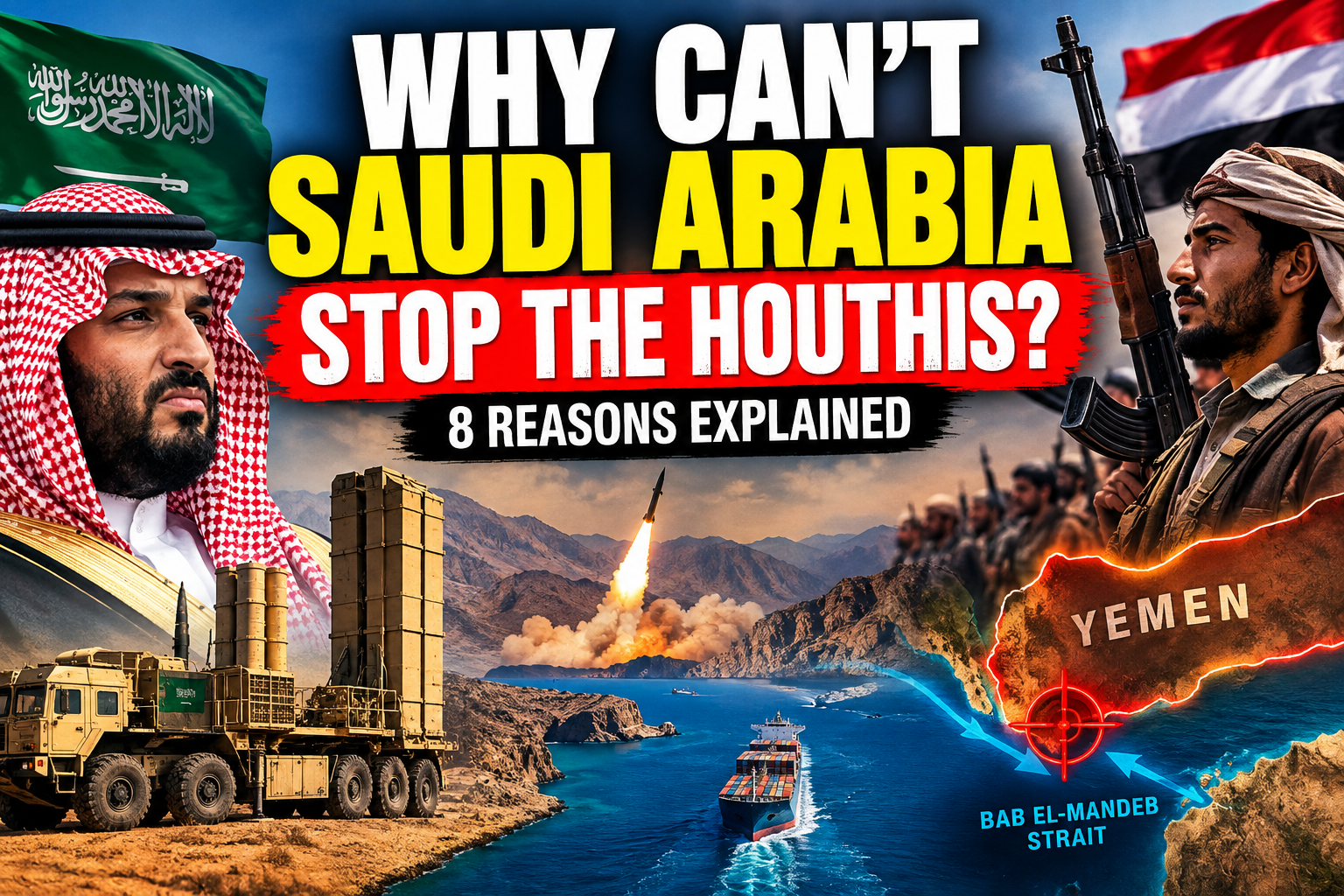
By WorldwideScope World Affairs Desk
Published: September 20, 2026
Saudi Arabia has one of the Middle East’s most powerful conventional militaries, billions of dollars in advanced weapons and extensive security relationships with the United States and other Western powers.
Yet Yemen’s Houthi movement continues to challenge the kingdom.
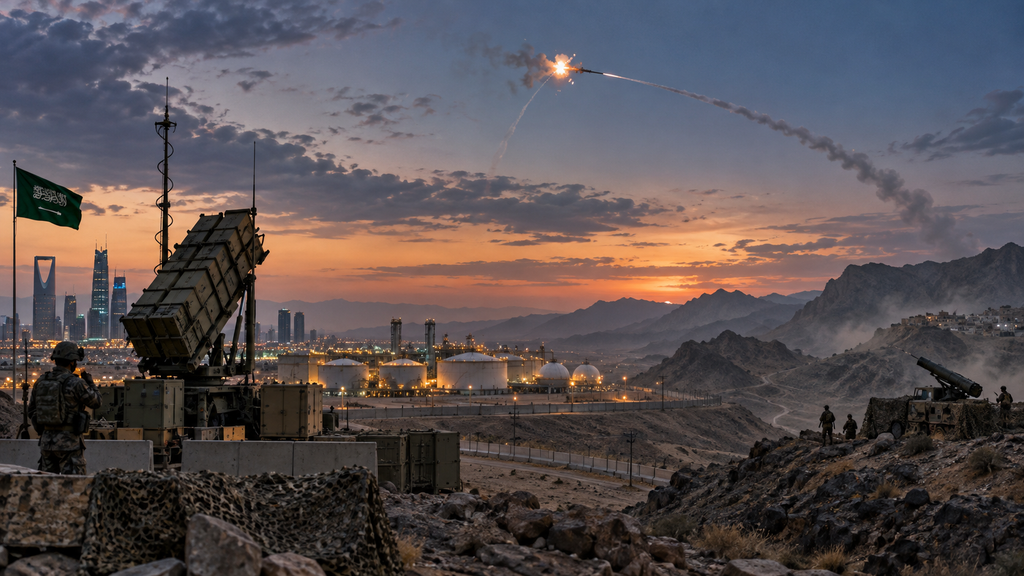
In September 2026, that challenge has intensified dramatically. Saudi Arabia says the Houthis attempted to strike Riyadh with a ballistic missile and also targeted other locations, including critical infrastructure around the Red Sea. Saudi air defenses intercepted the Riyadh-bound missile, according to Saudi authorities cited by the Associated Press. The Houthis claimed attacks on sensitive sites and Saudi oil facilities, although those claims could not be independently verified.
At the same time, Saudi Arabia is reportedly running short of missile interceptors and has sought assistance from France, Britain, Pakistan and Egypt.
So why can’t a country with Saudi Arabia’s military resources simply defeat the Houthis?
The answer lies in the difference between destroying military targets and eliminating an armed movement.
Here are eight reasons the Houthi conflict remains so difficult.
1. Yemen’s Geography Gives the Houthis a Major Advantage
Yemen is an exceptionally difficult country in which to conduct a conventional military campaign.
Large parts of the country are mountainous, rugged and difficult to monitor. The Houthi movement emerged in northern Yemen and has spent decades developing local networks and operating in terrain it knows extremely well.
Air power can destroy buildings, weapons depots and launch sites. It is much harder to determine where a decentralized organization will operate next.
That creates a fundamental problem for Saudi Arabia.
A military can strike a known target. But if the objective is to permanently dismantle a movement with dispersed fighters, hidden equipment and local support networks, airstrikes alone rarely provide a straightforward solution.
The Houthis also have experience operating from areas where conventional military superiority is difficult to translate into political control.
2. The Houthis Are Not a Conventional Army
One of the biggest misunderstandings about the conflict is treating the Houthis like a traditional military.
They are an armed political movement with military capabilities, territorial control and a long history of insurgent warfare.
Reuters reported in September that the group began as a Zaydi Shiite revival movement in northern Yemen in the late 1990s and fought several wars against the Yemeni government before expanding dramatically after Yemen’s political collapse. The Houthis seized Sanaa, the capital, in 2014.
That history matters.
Saudi Arabia can destroy individual missile launchers or weapons facilities without necessarily eliminating the organization responsible for operating them.
This is the same basic strategic problem that has confronted major militaries in other insurgency and guerrilla conflicts: military superiority does not automatically produce political control.
3. Iran Provides Important Support
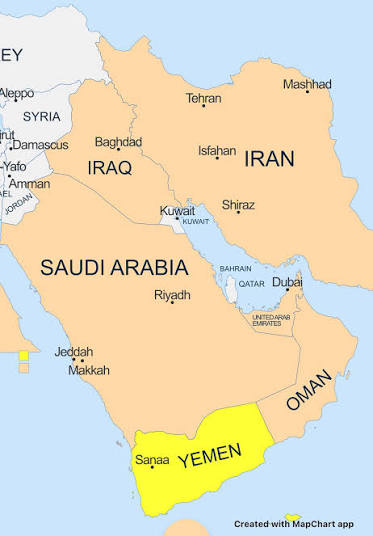
Iran is a major factor in the Houthi equation.
The Houthis receive Iranian financial and military assistance, including weapons, technology and expertise, according to multiple assessments. Reuters has described the group as Iran-aligned and reported that Iranian support helped the Houthis develop capabilities that allow them to threaten shipping and strike infrastructure in neighboring Saudi Arabia.
But there is an important distinction.
Calling the Houthis simply an Iranian-controlled proxy can oversimplify the relationship.
A recent assessment from the Critical Threats Project says the Houthis receive extensive Iranian support but also pursue their own objectives and should not automatically be assumed to take orders from Tehran.
That makes the problem harder.
Pressure on Iran does not necessarily guarantee that the Houthis will stop fighting.
The movement has its own political interests, territorial ambitions and reasons for confronting Saudi Arabia.
4. Saudi Arabia Has to Defend a Huge Area

Saudi Arabia’s geography creates another problem.
The kingdom is enormous, and its most strategically important infrastructure is spread across a vast territory.
Oil facilities, pipelines, military bases, airports, government installations and population centers all require protection.
A relatively inexpensive drone or missile can force Saudi Arabia to spend far more on detection and interception.
That creates an unfavorable cost equation.
The attacker does not necessarily need to destroy a target every time.
If the defender must maintain expensive air-defense systems around multiple strategic locations, the defender can still face significant financial and logistical pressure.
The problem has become even more serious because Saudi Arabia is now dealing with threats from multiple directions amid the broader regional war.
5. Missile Defense Has a Finite Supply

This may be one of the most immediate reasons Saudi Arabia is struggling in the current escalation.
According to AP, Saudi Arabia is running low on missile interceptors and has asked France, Britain, Pakistan and Egypt for additional air-defense assistance.
The problem is partly connected to the wider regional conflict.
The United States, Saudi Arabia’s principal military partner, has also been using substantial missile-defense resources during the war with Iran.
That means interceptor missiles cannot simply be treated as an unlimited resource.
Every time an expensive interceptor is fired against an incoming missile or drone, another round of ammunition is consumed.
Saudi Arabia therefore has to think about not only whether it can intercept an incoming weapon, but whether it can sustain that level of defense over weeks or months.
That is a very different problem from defeating a conventional army in a short campaign.
6. The Houthis Are Getting Closer to a Strategic Chokepoint
The Houthi challenge is no longer limited to attacks on Saudi territory.
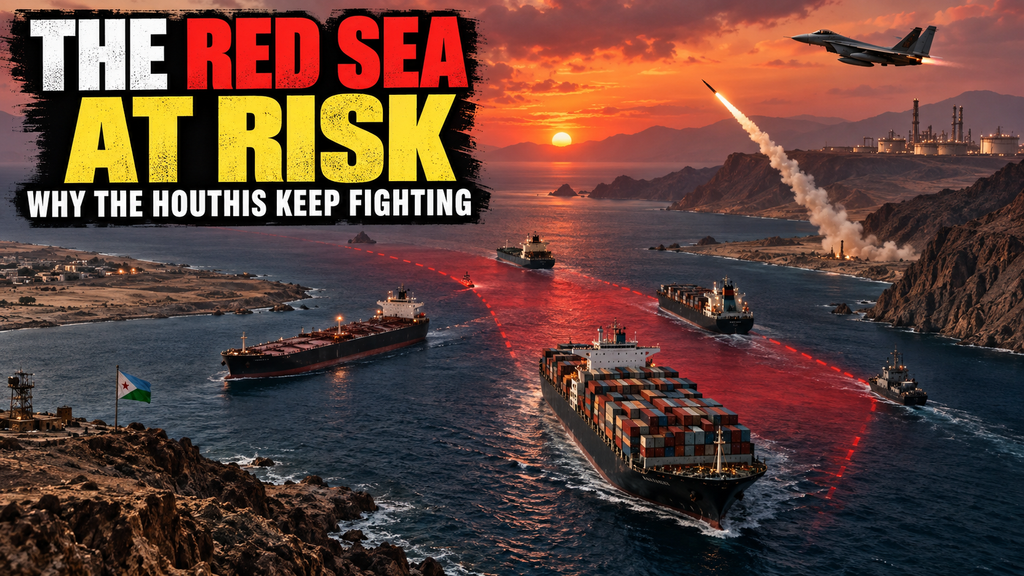
The group has expanded its position along Yemen’s western coast, moving toward the strategically vital Bab el-Mandeb Strait.
The narrow waterway connects the Red Sea with the Gulf of Aden and is one of the world’s major maritime chokepoints.
Reuters reported that Houthi forces reached islands near the strait during their September advance, increasing their ability to monitor and potentially threaten maritime traffic.
This matters enormously for Washington.
The United States has long regarded freedom of navigation through major international waterways as a strategic interest.
It also matters to global energy markets.
Saudi Arabia has increasingly relied on Red Sea export routes as the wider regional conflict has disrupted the Strait of Hormuz.
That makes the Houthi advance a problem extending far beyond Yemen.
7. Saudi Arabia Does Not Want Another Ground War
There is another factor that receives less attention: Saudi Arabia has already experienced what a prolonged Yemen war can cost.
Saudi Arabia launched a major military intervention in Yemen in 2015 against the Houthis and their allies.
Years of fighting failed to produce a decisive military victory.
A UN-brokered truce in 2022 dramatically reduced large-scale fighting, producing several years of relative calm.
The current escalation threatens to undo that period.
But sending large numbers of Saudi ground troops back into Yemen would carry enormous risks.
Saudi forces would be operating in difficult terrain against an experienced adversary that has demonstrated its ability to survive years of bombardment.
A ground invasion could also produce substantial casualties, political pressure and a potentially open-ended occupation problem.
For Riyadh, therefore, the question isn’t simply:
“Can we hit the Houthis?”
It is:
“What happens after we hit them?”
8. The Anti-Houthi Side Is Fragmented
The Houthis have also benefited from divisions among their opponents.
Yemen’s internationally recognized government and various armed factions do not always share identical political interests.
Southern Yemeni groups, local forces and regional actors have different priorities.
That makes it difficult to construct a single unified military strategy capable of defeating the Houthis and governing territory afterward.
A military campaign can remove fighters from one area.
But unless another force can securely hold that territory, the Houthis may eventually return.
This is one reason the conflict has repeatedly resisted simple military solutions.
Why Saudi Arabia Can Destroy Targets but Still Struggle to “Win”
This is the key distinction.
Saudi Arabia has substantial military capabilities.
Its air force can conduct long-range strikes. Its air-defense systems can intercept missiles and drones. Its military has access to advanced Western weapons and intelligence.
But those capabilities are optimized for conventional military operations and territorial defense.
The Houthis present a different type of challenge.
They can disperse.
They can hide equipment.
They can operate from difficult terrain.
They can use relatively inexpensive drones and missiles.
And they do not need to defeat the Saudi military in a conventional battle.
They only need to maintain enough capability to continue threatening Saudi interests.
That changes the definition of military success.
Why This Matters to the United States
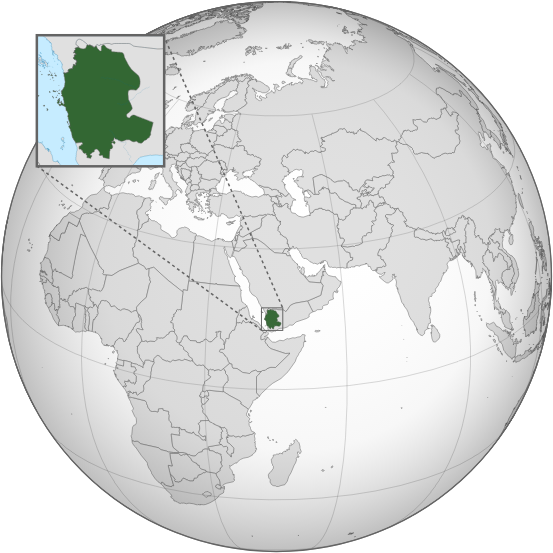
For Americans, the Saudi-Houthi confrontation is not simply another Middle Eastern conflict.
The geography makes it an international security issue.
The Bab el-Mandeb Strait is located at the entrance to the Red Sea, connecting shipping routes between Europe and Asia.
If fighting threatens commercial vessels, shipping companies can be forced to reroute around Africa.
That adds time, fuel costs and insurance expenses to global trade.
The consequences can eventually reach American consumers through higher transportation and commodity costs.
The conflict also creates a difficult strategic choice for Washington.
The United States has longstanding defense ties with Saudi Arabia, but direct military intervention against the Houthis could open another front in an already highly unstable region.
Reuters reported that U.S. officials have indicated Washington is not currently seeking a direct military role against the Houthis, while U.S. support includes intelligence sharing and planning assistance with Saudi forces.
At the same time, allowing the Houthis to gain greater control around Bab el-Mandeb could create a serious threat to international shipping.
That leaves Washington balancing two competing objectives:
protect freedom of navigation without becoming trapped in another open-ended Middle Eastern war.
The Oil Question
Saudi Arabia is the world’s largest oil exporter, which makes the security of its export infrastructure particularly important.
The Houthis have previously demonstrated an ability to threaten Saudi energy infrastructure.
The current conflict has made the Red Sea route even more strategically important because other regional shipping routes have been disrupted.
Analysts cited by Al Jazeera noted that Saudi crude shipments through Bab el-Mandeb increased significantly during the months following disruptions around the Strait of Hormuz.
If the Houthis can consistently threaten that route, the consequences could extend into global energy markets.
That does not mean every Houthi attack will automatically cause an oil-price shock.
But sustained disruption around major maritime chokepoints increases risk for shipping companies, insurers, energy traders and governments.
Can Saudi Arabia Eventually Defeat the Houthis?
That depends heavily on what “defeat” means.
If the objective is to destroy specific missile sites, weapons facilities or command centers, Saudi Arabia and its partners possess considerable capabilities.
If the objective is to completely eliminate the Houthi movement as a political and military force, the challenge is dramatically greater.
The history of Yemen suggests that military pressure alone is unlikely to produce an easy solution.
The Houthis have survived years of war, retained territorial influence and developed increasingly sophisticated weapons capabilities.
And the latest fighting demonstrates that the movement remains capable of imposing costs on a much wealthier and more heavily armed opponent.
The Bigger Picture
Saudi Arabia’s struggle with the Houthis is not really a story about one country having better weapons than another.
It is a story about asymmetric warfare.
Saudi Arabia has the larger military, greater financial resources and access to advanced technology.
The Houthis have geography, experience, dispersed forces, local networks and the ability to impose costs with relatively inexpensive weapons.
And now they are operating near one of the world’s most important maritime chokepoints.
That combination makes the conflict difficult to solve through military power alone.
For the United States, the stakes are even broader.
The future of the Red Sea, the security of global shipping, the stability of energy markets and the question of how much military involvement Washington should accept in another Middle Eastern conflict are all increasingly connected to what happens in Yemen.
The central question is therefore no longer simply why Saudi Arabia can’t stop the Houthis.
It is whether Saudi Arabia, the United States and their regional partners can contain the threat without turning Yemen into another prolonged regional war.
For now, the answer remains uncertain.
And the events of September 2026 suggest that the Houthi conflict is once again becoming a problem that reaches far beyond Yemen’s borders.
WorldwideScope Key Takeaway
Saudi Arabia has the military capability to strike Houthi targets, but permanently eliminating the movement is a fundamentally different challenge. Difficult terrain, decentralized forces, Iranian support, missile-and-drone warfare, Saudi Arabia’s huge infrastructure footprint, limited interceptor stocks and the strategic importance of Bab el-Mandeb all complicate Riyadh’s options. Current reporting shows the kingdom is seeking additional air-defense support as the conflict intensifies.