
By WorldwideScope Business & Energy Desk
Published: September 23, 2026
The Trump diesel export ban debate is becoming a major issue for global fuel markets, as the U.S. considers restricting diesel shipments abroad while Europe and other fuel buyers increasingly look toward India for alternative supplies.
President Donald Trump has backed the idea of restricting U.S. diesel exports as American fuel prices hit record levels, raising the prospect of another major disruption to an already strained global diesel market.
Trump’s comments came as Republican lawmakers pushed the administration to keep more American diesel at home for farmers, truckers and other fuel-intensive industries. U.S. average retail diesel prices have climbed above $6.50 a gallon, according to AAA data cited by Reuters.
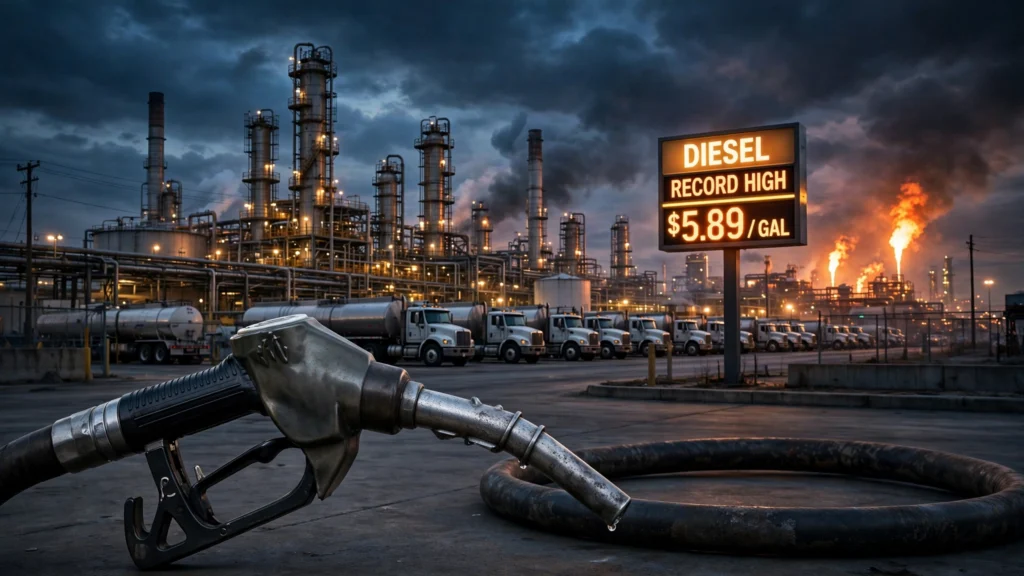
But the proposed policy comes at a complicated moment.
The United States is one of the world’s biggest diesel exporters, and its refineries have been sending record volumes overseas. At the same time, Russia has restricted diesel exports after attacks damaged its refining system, while conflict in the Middle East has disrupted fuel production and shipping.
That combination has created an unusual situation: the United States is trying to protect its domestic fuel market while much of the rest of the world is desperately looking for replacement supplies.
And one of the biggest beneficiaries of that shift is India.
What Trump Has Actually Said About a Diesel Export Ban
Trump said on September 22 that he supported the idea of stopping diesel exports from the United States.
“I’ve said let’s not send out the diesel,” Trump told reporters at the United Nations, according to Reuters. He said the United States produces large amounts of diesel and that he had already raised the issue with his administration.
However, this does not mean a nationwide export ban is already in effect.
Treasury Secretary Scott Bessent said the administration was examining whether a full or partial ban would be feasible and what impact such restrictions could have on the refining system.
That distinction is important for businesses and consumers.
A policy announcement would be one thing. Actually restricting exports across the U.S. refining system could have much broader consequences for American refiners, global fuel buyers and domestic prices.
Why Is Diesel So Expensive Right Now?

The current diesel squeeze is not being caused by a single event.
It is the result of several disruptions occurring simultaneously.
Russia, historically one of the world’s largest suppliers of diesel, has seen refinery operations damaged by Ukrainian attacks and has restricted exports.
The Middle East has also suffered refinery and shipping disruptions linked to the wider Iran conflict.
At the same time, restrictions and disruptions have reduced supplies from other major refining centers.
Reuters reported this week that global diesel prices have reached record levels, with European diesel futures more than doubling from their 2026 starting point. Middle Eastern diesel exports fell sharply between March and August, while refineries in several regions are operating close to capacity.
The International Energy Agency has warned that many refineries are already operating at high utilization rates, leaving relatively few immediate options for significantly increasing global fuel production.
That is why replacing lost Russian and Middle Eastern barrels has become so difficult.
The U.S. Is Actually Exporting More Diesel
The proposed American restriction comes against the backdrop of exceptionally strong U.S. diesel exports.
According to S&P Global, U.S. diesel exports reached approximately 1.6 million barrels per day in August, the highest level on record in its cited data. Much of that fuel went to Latin America and Europe.
Reuters also reported that major buyers of American diesel include Brazil, Chile, Mexico, Peru, Morocco, France and the United Kingdom.
This creates the central policy dilemma.
If Washington stops or sharply reduces exports, more diesel could remain available inside the United States.
But international buyers would suddenly lose a major source of supply at exactly the moment when alternative supplies are already limited.
That could push global prices higher.
Why Europe Is Looking Toward India
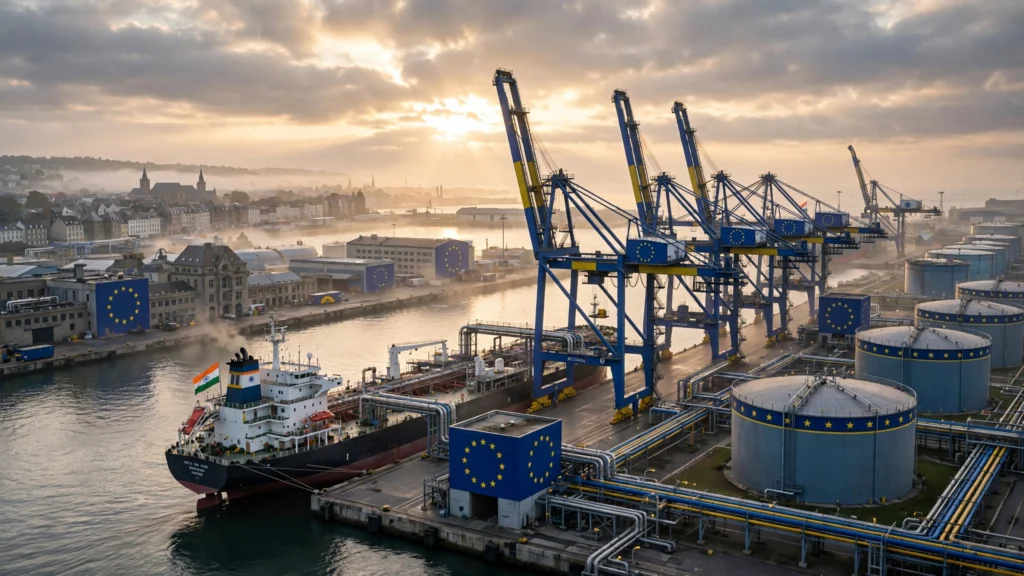
Europe has been particularly exposed to the diesel shortage.
The continent traditionally depends heavily on imported diesel because European refining capacity does not always produce enough of the fuel to meet regional demand.
Russia’s reduced exports have removed a major source of supply, while Middle Eastern shipments have also been disrupted.
Indian refiners are increasingly filling part of that gap.
Vortexa data cited by The Economic Times showed that about 200,000 barrels per day of diesel transited the Bab el-Mandeb toward Europe in August, and Indian refiners supplied roughly 60% of that volume.
That does not mean India has replaced all European diesel imports.
But it demonstrates how dramatically global trade routes are changing.
Fuel that might previously have been consumed in Asia or shipped to other destinations can now become economically attractive to European buyers because of the huge price difference between regions.
India’s Refining Capacity Is Becoming More Important
India has a major structural advantage in this situation.
The country has enormous refining capacity relative to its domestic fuel requirements.
India is the world’s fourth-largest refining center, with installed capacity of about 258.1 million tonnes per year, according to data cited by The Economic Times. During the 2025–26 financial year, India exported about 61.5 million tonnes of petroleum products.
Large private refineries, particularly Reliance Industries’ Jamnagar complex, have the flexibility to process large quantities of crude and produce export-oriented refined products.
Reliance significantly increased diesel shipments to Europe and Brazil during July as global fuel markets tightened, according to Reuters reporting based on shipping data and trade sources.
India’s fuel exports also reached a one-year high in July, with Kpler data showing refined-fuel exports of approximately 1.53 million barrels per day.
The result is a growing role for India as a swing supplier in the global refined-products market.
India Just Made Fuel Exports More Competitive
There is another development that could make Indian exports even more relevant.
On September 16, India reduced windfall taxes on exports of petrol, diesel and aviation turbine fuel. The change took effect immediately.
Lower export taxes can improve the economics of sending refined products into international markets.
That is particularly significant when European diesel prices are elevated.
Indian refiners can compare the economics of selling fuel domestically with exporting it to Europe, Africa, Asia or other markets and direct cargoes toward destinations offering the strongest returns.
Global supply shortages therefore create a powerful commercial incentive for Indian refiners to increase exports.
Turkey Is Already Buying More Indian Diesel
The shift is not limited to Europe.
Turkey, which previously relied heavily on Russian diesel, sharply increased imports from both India and the United States in August.
Reuters reported that Turkish imports of Indian diesel exceeded 120,000 barrels per day during the month, according to Kpler data. U.S. supplies reached about 90,000 barrels per day. Both represented record monthly levels in the cited data.
The reason was straightforward.
Russia had previously supplied about 85% of Turkey’s diesel imports in 2025. By August 2026, Russia’s share had fallen to about 20% as Moscow’s export restrictions and refinery disruptions reduced available supplies.
Turkey therefore had to find alternative suppliers.
India was one of them.
What About Australia?

Australia is also facing higher fuel prices and global supply uncertainty, but the situation needs to be described carefully.
Australia is highly dependent on imported petroleum products, making it vulnerable to global diesel disruptions.
The Australian government says it currently has healthy fuel stocks and multiple import sources. As of September 18, government data showed about 31 days of diesel coverage under the country’s fuel-security system, while dozens of fuel shipments were on the way.
However, Canberra is clearly paying closer attention to India.
Australian Climate Change and Energy Minister Chris Bowen is visiting India and Saudi Arabia this week to strengthen Australia’s fuel security. His India visit includes a trip to the Jamnagar refinery.
Australia and India have also formally agreed to strengthen energy trade and supply-chain cooperation, with India identified as an important supplier of liquid fuels and downstream products to Australia.
So Australia’s relationship with India is becoming more important—but it would be premature to say Australia has already switched its fuel supply almost entirely to India.
Why a U.S. Diesel Ban Could Backfire
The central economic question is whether keeping more diesel inside the United States would actually lower American prices over the longer term.
Some analysts argue that it could provide short-term relief.
Others warn that the consequences could move in the opposite direction.
The American Petroleum Institute has opposed export restrictions, arguing that Gulf Coast refineries produce more diesel than the region itself consumes and that infrastructure limitations make it difficult to simply redirect all excess fuel to other parts of the United States.
Reuters also reported analysts’ concerns that an export ban could reduce refinery runs.
That may sound counterintuitive.
If the United States has more diesel, why would refiners produce less?
The answer is economics.
Refineries need access to profitable markets. If exports are suddenly restricted, some facilities—particularly those designed around export markets—could reduce production rather than continue operating at maximum capacity with limited outlets.
That could eventually reduce the amount of diesel available domestically.
Europe Could Face an Even Bigger Problem
For Europe, the timing could be particularly difficult.
S&P Global reported that Middle Eastern diesel exports to Europe were heading toward their lowest September level in six years, with shipments averaging only about 110,000 barrels per day during the month. European diesel prices have surged amid the supply squeeze.
If U.S. exports are simultaneously reduced, European buyers would have to compete for fewer available barrels from India, the Middle East, Asia and other suppliers.
That could push prices higher.
And because diesel powers trucks, agricultural machinery, construction equipment and industrial transportation, the consequences would not stop at gas stations.
Higher diesel costs can eventually feed into the prices of food, manufactured goods and almost everything transported by road.
The Global Diesel Map Is Being Redrawn

The emerging pattern is bigger than a possible U.S. export ban.
The global refined-fuel market is undergoing a major redistribution.
Russia is exporting less.
Middle Eastern supply has been disrupted.
China has reduced exports at various points during the crisis.
Europe needs additional diesel.
The United States is considering keeping more of its own fuel at home.
And India has the refining capacity to respond when international prices make exports attractive.
That makes India increasingly important to the global fuel system.
For New Delhi, this is also an economic opportunity—but not without risks.
Indian refiners need crude oil, shipping capacity and reliable trade routes. A prolonged geopolitical crisis could disrupt those inputs just as easily as it creates opportunities for exports.
What This Means for American Consumers
For Americans, the immediate issue is simple: diesel is expensive.
But the proposed solution could have consequences beyond the price at the pump.
A diesel export restriction could affect refinery economics, international fuel prices, American trading partners and global transportation costs.
If global prices rise sharply, American businesses that import other goods could also feel the impact through higher freight and logistics costs.
The policy therefore involves a difficult trade-off between protecting domestic fuel availability and maintaining the United States’ role as a major supplier to the international market.
And that decision is arriving at a particularly sensitive time for the global economy.
The Bigger Picture
The diesel crisis is becoming a test of how interconnected the modern energy system has become.
A refinery shutdown in Russia can affect Turkey.
A disruption in the Middle East can affect Europe.
A change in U.S. export policy can affect fuel prices thousands of miles away.
And when those events occur simultaneously, countries with spare refining capacity become strategically more important.
India is one of those countries.
The evidence already shows European and Turkish buyers increasing their reliance on Indian diesel, while Australia is strengthening energy-security cooperation with New Delhi.
But whether India can fully compensate for a significant decline in U.S. exports is another question.
The global market is already operating with limited spare refining capacity.
That means replacing every lost barrel could become increasingly expensive.
WorldwideScope Key Takeaway
Trump has backed the idea of restricting U.S. diesel exports, but a full export ban has not yet been implemented. The administration is studying whether a full or partial restriction is workable. Meanwhile, Europe and other importers are increasingly turning to alternative suppliers, with India emerging as an important source of refined fuel.
The crucial question for global markets is whether the United States can keep more diesel at home without triggering an even tighter international fuel shortage.