RIYADH / JERUSALEM — Confronted by a sharp escalation in Houthi offensive operations that threaten both vital energy infrastructure and Red Sea shipping channels, Saudi Arabia has taken unprecedented behind-the-scenes steps to bolster its air and maritime defence networks.
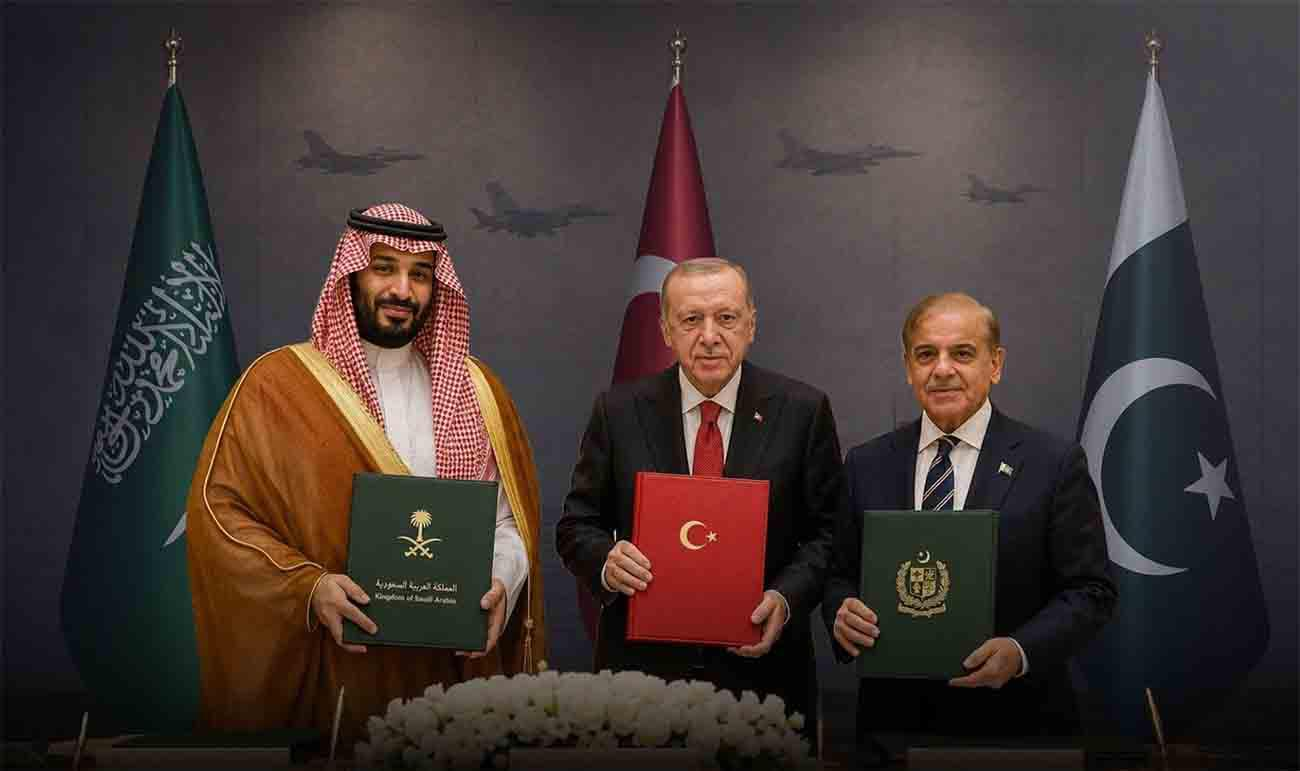
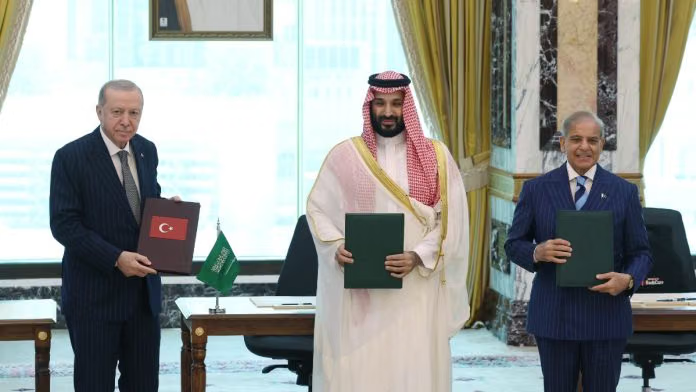
Concurrently, regional diplomacy has encountered a pragmatic reality check: despite signing a high-profile tripartite mutual-defence agreement known as the “Mecca Pact” alongside Pakistan and Turkey last month, Riyadh finds itself navigating the immediate military emergency without the direct deployment of allied ground troops.
The convergence of these security pressures is accelerating a quiet pragmatic realignment across the Arabian Peninsula.
1. Backchannels via CENTCOM: Pragmatism Over Proclamations
Facing sophisticated aerial and maritime tactics from Houthi forces in Yemen, Saudi Arabia has sought specialized intelligence assistance from Israel. According to diplomatic sources cited by The Jerusalem Post, these indirect exchanges have been facilitated under the operational umbrella of the United States Central Command (CENTCOM).
Rather than signaling a formal diplomatic normalization, the cooperation is tightly focused on operational intelligence:
- Deployment Tracking: Synthesizing real-time satellite radar and signals intelligence to map Houthi missile launches, drone assembly locations, and mobile launch platforms along Yemen’s western coastline.
- Maritime Reconnaissance: Leveraging Israeli naval intelligence capabilities already honed around the Bab al-Mandab Strait and the southern Red Sea to monitor hostile movements near key maritime passages.
- Target Identification: Constructing a predictive operational picture to preempt strikes against critical energy infrastructure and commercial vessels.
This triangular coordination highlights CENTCOM’s expanding role as an integration bridge between Arab Gulf states and Israel, enabling functional security cooperation without requiring explicit diplomatic agreements.
2. The Limits of ‘Paper Coalitions’: The Mecca Pact Tested
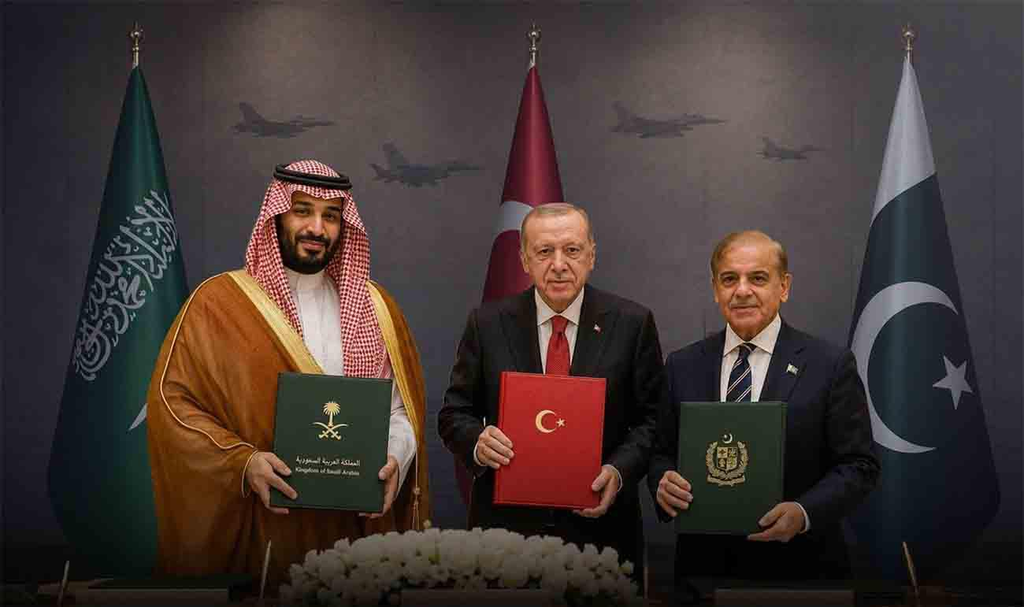
The rapid escalation has placed a spotlight on the trilateral defence agreement concluded on August 7, 2026, between Saudi Arabia, Pakistan, and Turkey. Dubbed the “Mecca Pact,” the framework established a collective defence provision stipulating that an armed assault against one signatory would be treated as an attack against all.
However, operational realities have diverged from diplomatic declarations:
                          ┌──────────────────────────┐
                          │   Houthi Attacks on      │
                          │   Energy & Shipping      │
                          └─────────────┬────────────┘
                                        │
             ┌──────────────────────────┴──────────────────────────┐
             ▼                                                     ▼
┌──────────────────────────┐                             ┌──────────────────────────┐
│   Diplomatic Security    │                             │  Operational Capability  │
│       (Mecca Pact)       │                             │   (CENTCOM Backchannel)  │
├──────────────────────────┤                             ├──────────────────────────┤
│ • Pakistan / Turkey      │                             │ • Israeli Intel Sharing  │
│ • Political alignment    │                             │ • UK Advisory Support    │
│ • No troops on ground    │                             │ • Focused Asset Defense  │
└──────────────────────────┘                             └──────────────────────────┘
While Pakistani Defence Minister Khawaja Asif confirmed that collective defence provisions could theoretically be triggered if external conflicts spill directly into Saudi sovereign territory, Pakistan’s Foreign Ministry subsequently clarified that no active troop deployments are under discussion.
For Islamabad, sending ground forces into an ongoing regional conflict presents severe domestic political risks and military overstretch along its own borders. Consequently, while the diplomatic pact serves as a deterrent framework on paper, Riyadh has had to seek immediate tactical solutions elsewhere—including requesting military advisers from the United Kingdom to assist in safeguarding onshore energy facilities.
3. Infrastructure Under Fire: The Threat to Global Energy Flows
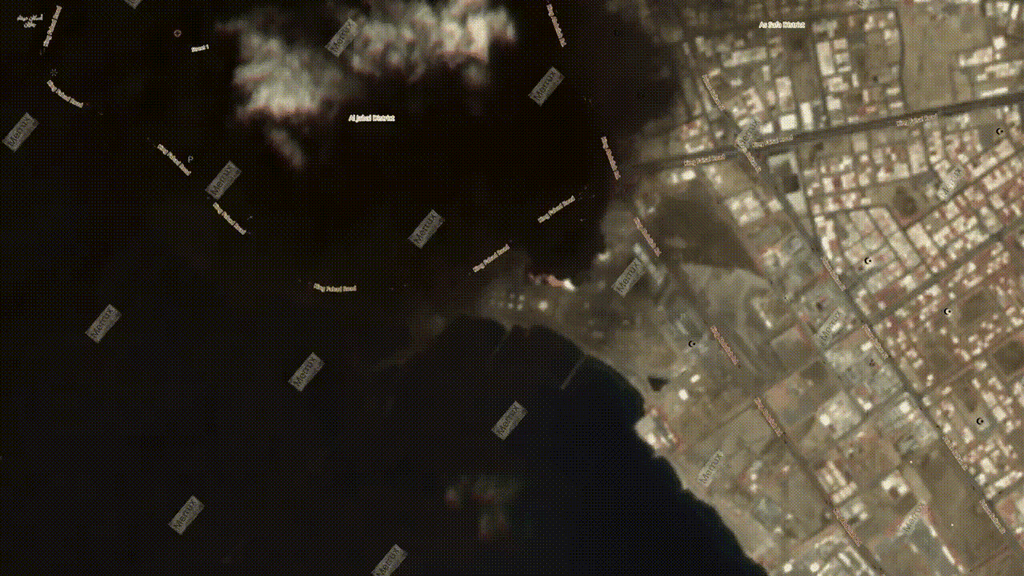
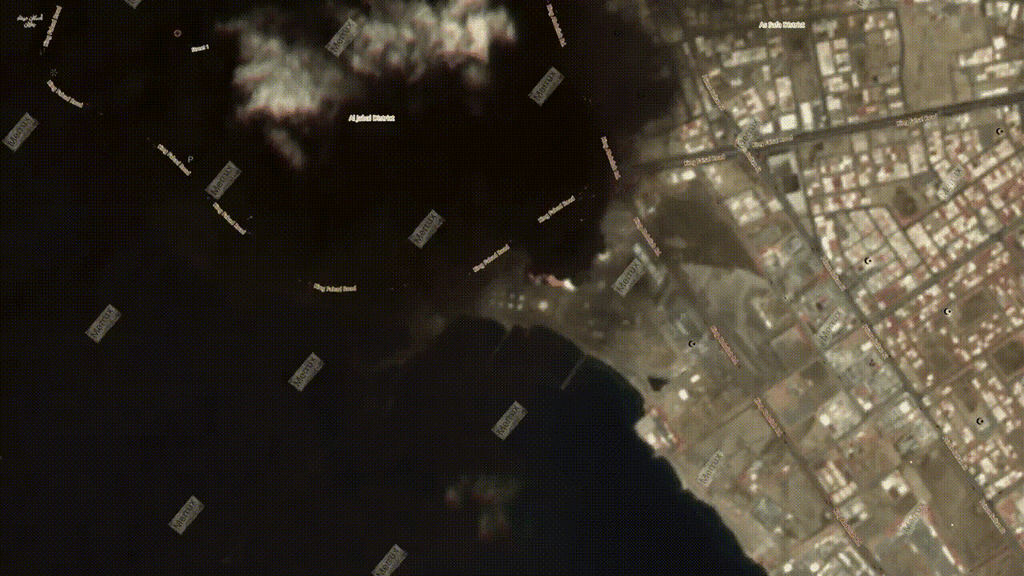
The necessity for immediate, high-grade intelligence stems from a series of coordinated strikes targeting Saudi Arabia’s economic arteries.
| Target Sector | Attack Mechanism | Operational & Economic Impact |
| East-West Pipeline | Long-range drone strike on pumping stations | Forced partial shutdown of the 1,200 km pipeline, risking up to 4% of global daily oil supply transport. |
| Bab al-Mandab Strait | Capture of Perim Island & Red Sea choke points | Restricted transit for Gulf vessels, elevating shipping insurance premiums across the region. |
| Border Communities | Cross-border artillery & drone strikes | Emergency alerts issued in southern provinces; multiple civilian casualties reported near border towns. |
The 1,200-kilometer East-West Pipeline—constructed in the 1980s specifically to bypass the vulnerable Strait of Hormuz—serves as Saudi Arabia’s key strategic backup for exporting crude oil to western markets via the Red Sea. Disruptions along this line directly affect global energy markets already sensitive to regional instability.
4. What Lies Ahead: Strategic Implications for the Region
The evolving dynamics point toward three key strategic takeaways for the Middle Eastern security architecture:
- Functional Security Trumps Formal Diplomatic Ties: When critical infrastructure is threatened, regional actors prioritize actionable operational capabilities over formal political declarations.
- CENTCOM as the Regional Anchor: The US military structure remains the central mechanism enabling intelligence sharing among non-traditional allies across the Middle East.
- Re-evaluation of Multilateral Pacts: The Mecca Pact’s limited immediate operational response highlights the challenge of turning broad collective-defence agreements into rapid joint military actions during active crises.
As Saudi authorities work to restore full capacity to damaged pipeline routes and secure sea lines of communication, the quiet intelligence network operating through CENTCOM is likely to remain a critical, behind-the-scenes element of the region’s defensive posture.