Trump courting Xi Jinping has become one of the most striking features of the latest U.S.-China summit. After years of tariff threats, technology restrictions and increasingly sharp competition between Washington and Beijing, President Donald Trump is now hosting Chinese President Xi Jinping at the White House with the ceremony normally associated with a major state visit.
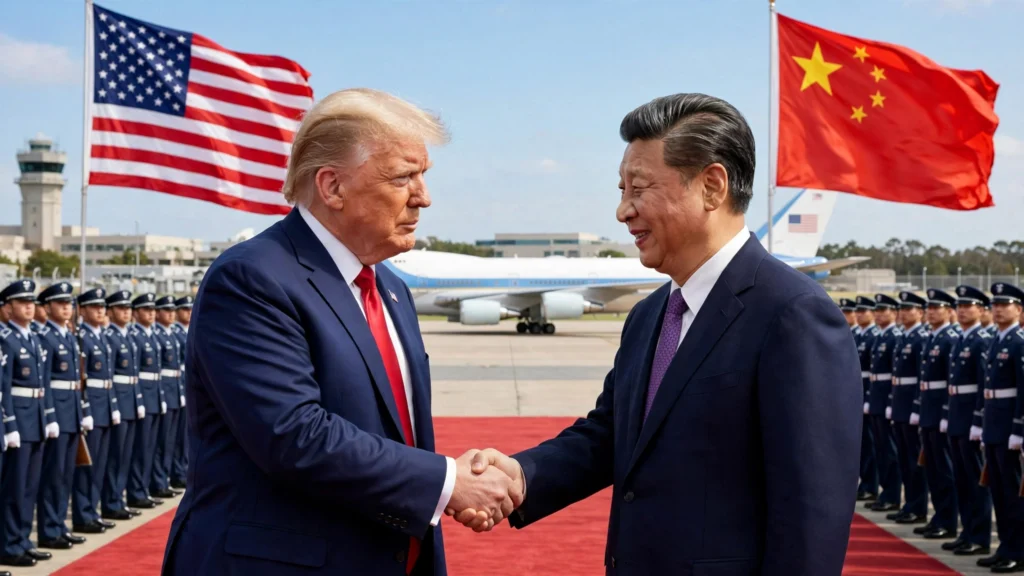
Xi arrived in Washington on Wednesday, September 23, and Trump personally greeted him at Joint Base Andrews. The visit is Xi’s first to Washington in more than a decade. On Thursday, September 24, the White House is hosting a formal state arrival ceremony featuring 479 U.S. military personnel, followed by talks and a state dinner.
The contrast is notable: the United States and China remain strategic competitors, but both governments are also trying to prevent their economic relationship from sliding back into the kind of confrontation seen during the previous tariff escalation.
So why is Trump putting so much emphasis on the relationship with Xi?
The answer is less about friendship and more about trade, economic stability, technology, critical minerals and geopolitical leverage.
Why Trump Is Courting Xi Jinping Now
The immediate reason is practical: Washington and Beijing have several major issues that neither side can easily solve without talking directly to the other.
The two governments have agreed to extend their trade truce until January, according to the Associated Press. That creates a temporary window in which both sides can negotiate without immediately returning to the broad tariff escalation that previously threatened to disrupt the global economy.
For Trump, maintaining that pause can create room to pursue specific economic objectives while avoiding another major shock to American businesses and consumers.
For Xi, the talks provide an opportunity to stabilize the relationship while seeking changes on issues important to China, including technology restrictions and Taiwan.
Reuters reports that both leaders are expected to use the summit to showcase stability even as the underlying strategic rivalry remains substantial.
This is why the warm public reception should not necessarily be interpreted as an end to U.S.-China competition.
Instead, it represents an attempt to manage the competition without allowing it to spiral.
1. Trump Wants a More Stable Trade Relationship
Trade remains at the center of the Trump-Xi relationship.
The United States and China are the world’s two largest economies, and their commercial relationship affects supply chains far beyond their borders.
The previous U.S.-China trade confrontation involved large tariffs and retaliatory measures. China also restricted some exports of critical minerals and related technologies, creating concerns among manufacturers and policymakers in the United States and elsewhere.
The current trade truce has reduced some of that immediate pressure.
But the underlying disagreements have not disappeared.
The Trump administration continues to pursue measures targeting particular Chinese companies, technologies and products, while Beijing has responded with its own restrictions and blacklists. AP reports that both sides have shifted away from the broadest tariff measures but continue competing through more targeted economic and technological restrictions.
For Trump, therefore, a meeting with Xi provides an opportunity to seek concrete commitments without reopening the entire trade conflict.
2. China Is Too Important to Ignore
Another reason for the diplomatic shift is China’s economic weight.
China remains a critical part of global manufacturing and supply chains, while its position in areas such as batteries, electric vehicles, industrial equipment and critical minerals gives Beijing significant economic leverage.
A complete economic separation between the United States and China would be extremely complicated and costly.
That does not mean Washington and Beijing are abandoning competition.
Instead, the current approach appears to involve a combination of competition and selective cooperation.
AP described the relationship as moving toward what some analysts call a “new normal” of greater stability despite continuing rivalry in technology, trade and geopolitics.
This helps explain the apparent contradiction in Trump’s approach: the administration can maintain pressure on China in strategic sectors while simultaneously negotiating with Xi.
3. Artificial Intelligence Has Become a New Battleground
The Trump-Xi meeting is also taking place against the backdrop of an intensifying U.S.-China AI competition.
Artificial intelligence has become one of the most important strategic technologies for both countries.
Washington has imposed restrictions on the export of some advanced semiconductor technology to China, citing national-security concerns. Beijing, meanwhile, has been developing its own AI ecosystem and seeking greater influence over international AI rules.
The two countries are now discussing whether they can establish at least limited communication around AI-related risks.
AP reported that U.S. Treasury Secretary Scott Bessent said Washington had proposed a notification mechanism for AI incidents that could affect national security.
That does not mean the United States and China have stopped competing in AI.
In fact, the opposite is true.
The AI race makes the relationship more complicated because technology that has enormous commercial value can also have military and national-security implications.
The Council on Foreign Relations has also highlighted the growing connection between the U.S.-China AI competition and Taiwan’s semiconductor ecosystem.
4. Taiwan Remains One of the Biggest Problems
Behind the friendly ceremony is one of the most difficult issues in the relationship: Taiwan.
Beijing considers Taiwan part of China and has not renounced the possibility of using force to achieve unification. Washington maintains unofficial relations with Taiwan and is legally required to provide it with defensive capabilities.
That creates a fundamental disagreement.
According to AP, Taiwan is expected to remain one of the most difficult subjects during the summit, with Xi potentially seeking limits or delays on U.S. arms sales to the island.
The issue is particularly sensitive because Taiwan is also central to the global semiconductor industry.
The Council on Foreign Relations has noted that Taiwan’s semiconductor ecosystem is important to U.S. AI ambitions, making stability across the Taiwan Strait increasingly connected to the technology competition between Washington and Beijing.
As a result, even if Trump and Xi reach agreements on trade, Taiwan could continue to limit how far the broader relationship can improve.
5. Iran Has Added Another Complication
Iran is another issue that makes the summit particularly important.
The Trump administration has been seeking to isolate Iran economically and politically during the ongoing conflict, while China maintains significant economic ties with Tehran.
AP reported that Beijing has insisted on its right to continue trading with Iran, while Washington has been trying to use economic pressure to influence Tehran.
That creates a potential area of disagreement between Trump and Xi.
At the same time, China has an interest in regional stability because instability in the Middle East can affect energy markets and international trade.
The Iran issue therefore gives both governments another reason to communicate directly even when their strategic interests differ.
6. Trump May Want Chinese Cooperation Without Ending the Rivalry
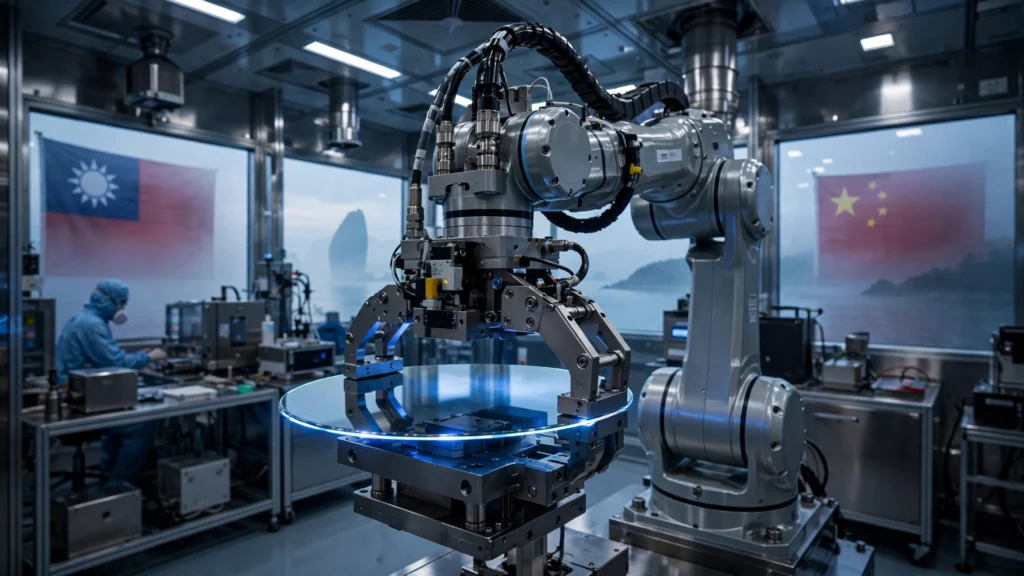
The biggest misunderstanding about Trump courting Xi Jinping would be to assume that the warmer tone means Washington has abandoned its competitive approach toward China.
Current evidence points in the opposite direction.
The United States continues to restrict certain Chinese technologies and companies, while China continues developing alternatives to U.S. technology and expanding its economic and strategic relationships around the world.
The difference is that Trump appears to be pursuing a relationship in which competition and negotiation happen simultaneously.
That approach can be seen in the trade truce.
Rather than completely resolving the fundamental disputes, Washington and Beijing have temporarily created space for negotiations.
The White House’s decision to host Xi with a formal state ceremony reinforces that diplomatic channel. The official schedule includes a military arrival ceremony, state dinner and additional cultural events.
What Does Xi Jinping Want From Trump?
The relationship is not one-sided.
Xi also has significant interests going into the Washington talks.
Among the major Chinese priorities are:
- Greater stability in the trade relationship
- Reduced pressure from U.S. technology restrictions
- Access to advanced semiconductor and AI technology
- Greater clarity over U.S. policy toward Taiwan
- Continued economic access to global markets
- Management of tensions over Iran and other geopolitical issues
Reuters reports that the summit is expected to focus heavily on trade while the broader relationship remains marked by strategic rivalry.
Xi therefore has reasons to accept the diplomatic warmth while continuing to defend China’s strategic interests.
From Tariff Threats to a State Dinner
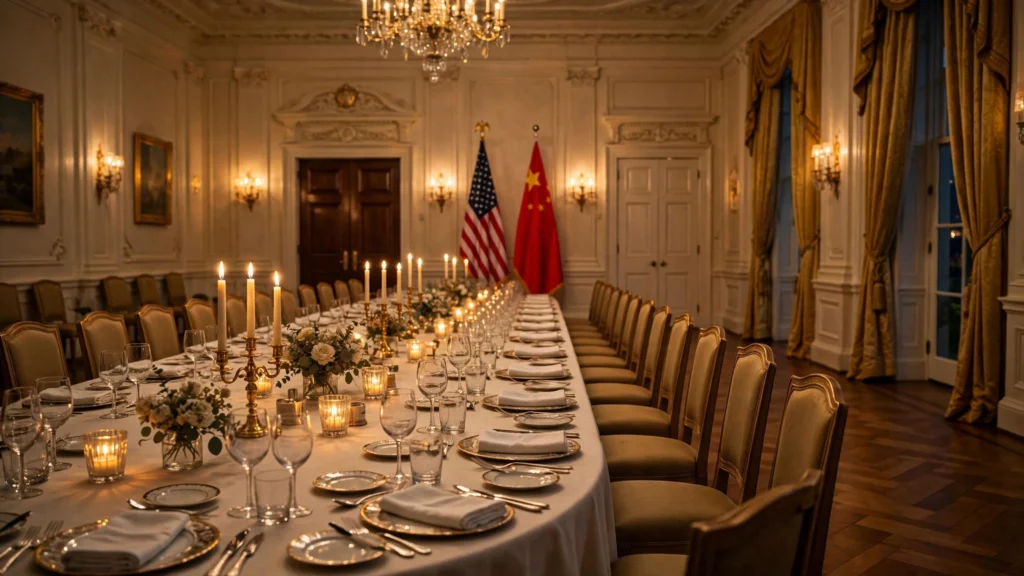
The symbolism of the visit matters.
Trump has previously used tough rhetoric toward China and criticized Beijing over trade, manufacturing and other issues.
Now Xi is receiving a formal state welcome in Washington.
The White House has planned a highly elaborate ceremony involving hundreds of military personnel, U.S. and Chinese flags, military performances and a flyover involving a B-2 bomber and F-22 fighter aircraft. A state dinner is also scheduled.
That does not erase years of tension.
But diplomacy often relies on precisely this kind of symbolism.
A leader-to-leader relationship can create channels that are difficult to maintain through lower-level negotiations alone.
For Trump, the personal relationship with Xi may also provide a way to pursue deals directly rather than relying entirely on bureaucratic negotiations.
Is Trump Really Changing His China Policy?
The available evidence suggests a more complicated picture than a simple policy reversal.
Trump is simultaneously:
Negotiating with China over trade.
Competing with China over technology.
Restricting certain Chinese technologies on national-security grounds.
Seeking stability in the economic relationship.
Pressuring China on issues important to Washington.
Maintaining dialogue with Xi despite major disagreements.
That combination is important.
The United States and China do not need to become allies for both governments to conclude that uncontrolled confrontation would be damaging.
The current summit appears to reflect that calculation.
The Bigger Question: Can the Truce Last?
The immediate challenge is whether the latest trade truce can become something more durable.
The two countries have already demonstrated that agreements can temporarily reduce tensions. But the underlying disputes over technology, Taiwan, trade imbalances, critical minerals and geopolitical influence remain.
The Council on Foreign Relations identified Taiwan, AI and Iran among the major issues surrounding Xi’s Washington visit.
That means even a successful summit would not necessarily represent a permanent transformation of U.S.-China relations.
Instead, the more realistic question is whether Trump and Xi can create enough stability to keep disagreements from turning into another major economic confrontation.
What Trump Wants From Xi — In Simple Terms
At its core, Trump’s strategy appears to involve several overlapping objectives:
1. Keep trade tensions under control.
A renewed tariff escalation could create new costs for businesses and consumers.
2. Secure economic commitments.
Washington wants China to make commercially meaningful commitments rather than simply maintain diplomatic dialogue.
3. Manage the technology competition.
AI and advanced semiconductors are now central to the strategic relationship.
4. Discuss Iran.
China’s economic relationship with Tehran gives Beijing influence that Washington wants to understand and potentially use diplomatically.
5. Keep communication open over Taiwan.
The Taiwan issue remains one of the greatest risks to U.S.-China relations.
6. Prevent strategic competition from becoming uncontrolled confrontation.
Both countries have reasons to maintain direct communication even while competing.
Trump and Xi: A New Phase, Not the End of the Rivalry
The dramatic welcome for Xi Jinping in Washington is certainly different from the harshest periods of recent U.S.-China relations.
But the symbolism should not be confused with a complete policy transformation.
Trump courting Xi Jinping is better understood as an effort to negotiate with a strategic competitor whose cooperation—or at least restraint—can matter to U.S. economic and geopolitical objectives.
Xi has his own priorities, particularly on trade, technology and Taiwan.
That makes the Washington summit less about friendship and more about managing an increasingly complex relationship between two global powers.
The state dinner, military ceremony and warm public reception may dominate the headlines, but the more important story will be what happens behind closed doors.
If Washington and Beijing can maintain the trade truce while establishing mechanisms for managing disputes over AI, technology, Taiwan and Iran, the relationship could enter a period of greater stability.
If those disagreements intensify again, the ceremony could ultimately be remembered as a pause rather than a lasting change.
For now, Trump and Xi are choosing negotiation over escalation.
What they can actually agree on remains the bigger question.